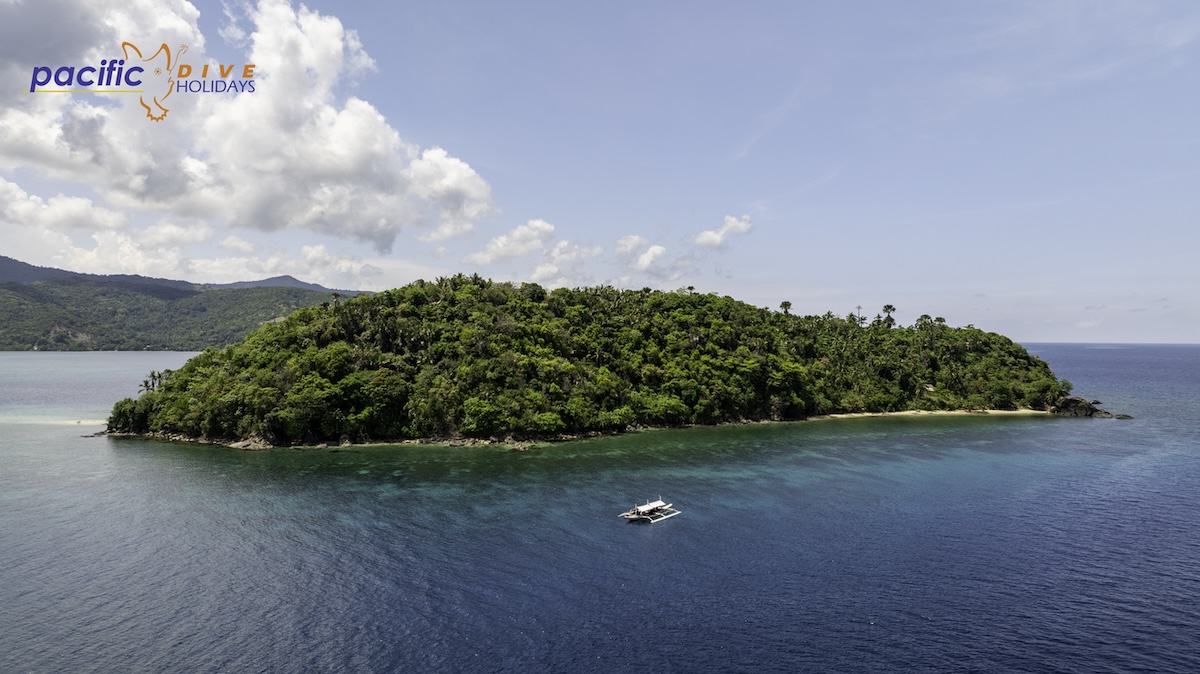
Romblon

About Romblon

If you have a passion for the tiny and the extraordinary, Romblon should be on of your list. Long before it became a "Super-Macro Mecca," this island served as a vital colonial outpost, with one of the deepest and most sheltered natural harbours in the Philippines. Its strategic value was so high that in the 17th century, the Spanish built the Twin Forts of San Andres and Santiago to defend the bay against Dutch privateers and Moro pirates. Beyond its military history, the island’s geology further cemented its fame; Romblon is carved from massive reserves of "Italian-grade" marble, a high-quality stone still crafted by local artisans and exported across the globe.

Despite its rich history, the island remained a silent frontier for scuba divers until 2009, when brothers Peter, Philipp, and Patrick Eschweiler founded The Three P Resort on their family land. What began as a modest operation quickly evolved into a macro lovers haven as the brothers and Philipp's wife, Kati (she really knows her stuff!) began documenting a surreal cast of special critters that few had ever seen. Today, the secret is well and truly out: with its uncrowded sites and incredible density of rare life—from the transparent Phantom Nudibranch to the Sashimi Shrimp—Romblon now rightfully stands alongside legends like Anilao, Lembeh, and Ambon as a premier macro and super macro destination.

Whilst it is perfectly possible to do ‘normal’ diving on the coral reefs and seagrass areas, Romblon is a real hotspot for a good number of ‘special’ creatures not regularly seen in other parts of the Philippines. Dive Centres in the area particularly focus on macro and super macro and have found an impressive list of creatures. The most sort after being the ‘Holy Grail’ of nudibranch lovers – Melibe colemani – the Phantom or Skeleton nudibranch; along with Melibe engali (ghost melibe), it is very commonly seen here. Whilst the colemani invariably steals the show, there are other wonderful opisthobranchs which can be found on a regular basis, including the butterfly sea slugs (Cyerce nigra, elegans and others). Over 500 species of opisthobranch have been found in the area. Plus, a huge variety of shrimp and crab, living on hosts you would never normally think of looking at to see if there was a special creature living there.

This is the only place in the country where 4 species of Pygmy Seahorse been found – Hippocampus bargibanti, denise, pontohi and severnsi.

In additional to all this, there is a wealth of cephalopods (e.g. Mimic Octopus, Wonderpus, Flamboyant Cuttlefish, Blue Ring Octopus) and special fish species (e.g. Lembeh Sea dragon, Frogfish, Filefish, Blennies, Hawkfish, Dragonets, Pipefish, Ghostpipefish, Gobies).

Possible to dive year-round. January to early June are the drier months.

Overnight ferry from Batangas to Romblon, or fly from Manila to Tablas Island and cross over to Romblon Island by boat.

Resorts in Romblon
  • The Three P Dive & Beach Resort

Liveaboards offering Romblon

No liveaboards found in this destination.

Diving Highlights

Macro

When to go

All year round possible, best March to June

Ease of travel

Fiddly, takes a while

Megafauna

Very little

Fish life

Ok on some of the reef dive sites

CORAL REEF

Some good reefs

MACRO ON REEF

Excellent

MUCK/MACRO

Excellent

WRECKS

None

Want to know more about Romblon?